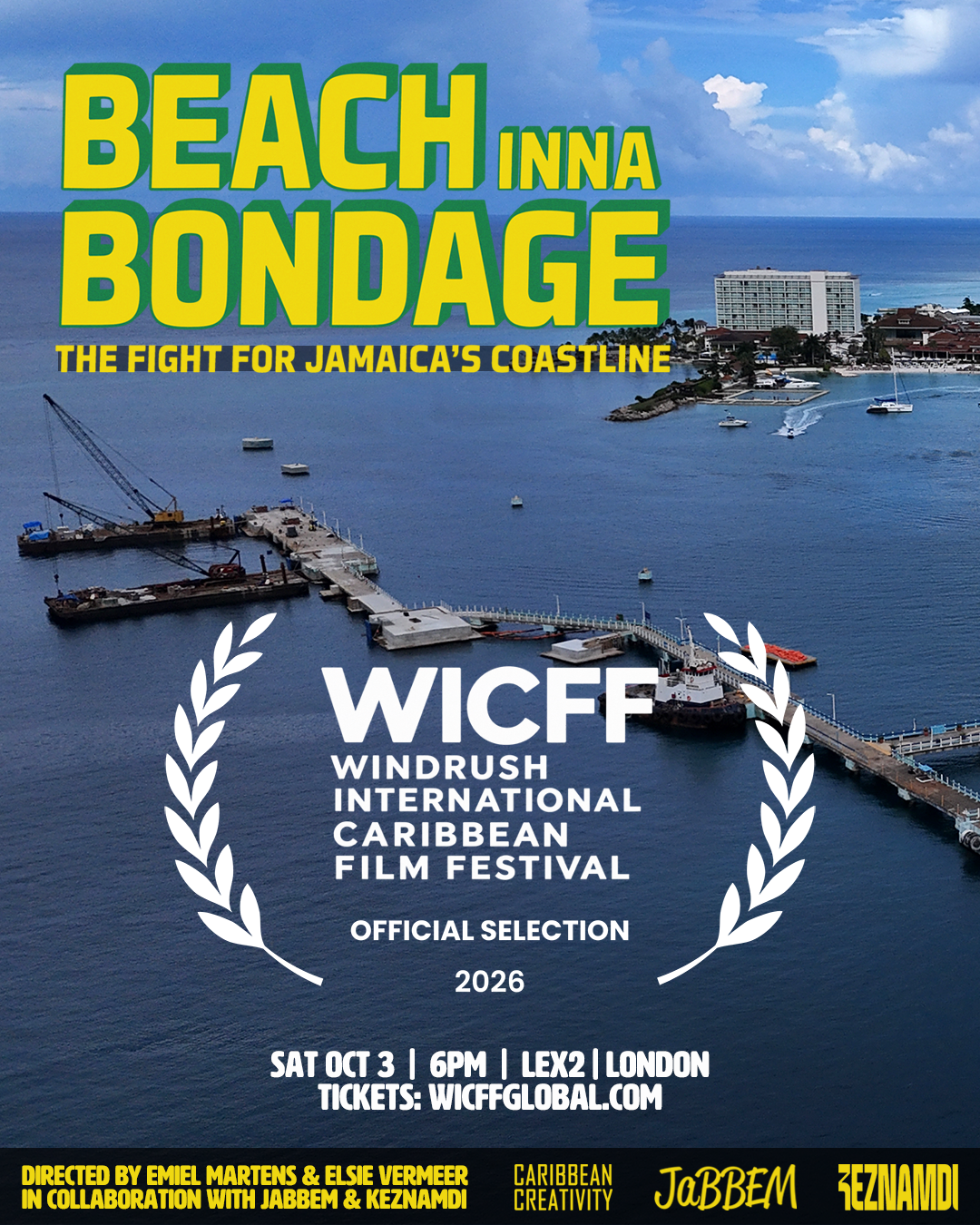
Windrush International Caribbean Film Festival 2026: Beach Inna Bondage (UK Premiere)
🎥 🇯🇲 🇬🇧 𝗔𝘁𝘁𝗲𝗻𝘁𝗶𝗼𝗻 𝗟𝗼𝗻𝗱𝗼𝗻! Join us on 𝗦𝗮𝘁𝘂𝗿𝗱𝗮𝘆, 𝗢𝗰𝘁𝗼𝗯𝗲𝗿 𝟯, at 𝟲𝗣𝗠 for the 𝘀𝗽𝗲𝗰𝗶𝗮𝗹 𝘀𝗰𝗿𝗲𝗲𝗻𝗶𝗻𝗴 of 𝗕𝗲𝗮𝗰𝗵 𝗜𝗻𝗻𝗮 𝗕𝗼𝗻𝗱𝗮𝗴𝗲: 𝗧𝗵𝗲 𝗙𝗶𝗴𝗵𝘁 𝗳𝗼𝗿 𝗝𝗮𝗺𝗮𝗶𝗰𝗮’𝘀 𝗖𝗼𝗮𝘀𝘁𝗹𝗶𝗻𝗲 at the 𝗪𝗶𝗻𝗱𝗿𝘂𝘀𝗵 𝗜𝗻𝘁𝗲𝗿𝗻𝗮𝘁𝗶𝗼𝗻𝗮𝗹 𝗖𝗮𝗿𝗶𝗯𝗯𝗲𝗮𝗻 𝗙𝗶𝗹𝗺 𝗙𝗲𝘀𝘁𝗶𝘃𝗮𝗹 𝟮𝟬𝟮𝟲. We’re proud to bring our film to 𝗪𝗜𝗖𝗙𝗙𝟮𝟬𝟮𝟲 for its 𝗨𝗞 𝗽𝗿𝗲𝗺𝗶𝗲𝗿𝗲. The screening will be followed by a panel exploring access, displacement, community, and the fight to protect the places we call home. 🙏🏿🖤✊🏿
𝗪𝗜𝗖𝗙𝗙 𝟮𝟬𝟮𝟲: 𝗕𝗲𝗮𝗰𝗵 𝗜𝗻𝗻𝗮 𝗕𝗼𝗻𝗱𝗮𝗴𝗲: 𝗧𝗵𝗲 𝗙𝗶𝗴𝗵𝘁 𝗳𝗼𝗿 𝗝𝗮𝗺𝗮𝗶𝗰𝗮’𝘀 𝗖𝗼𝗮𝘀𝘁𝗹𝗶𝗻𝗲 (𝗨𝗞 𝗣𝗿𝗲𝗺𝗶𝗲𝗿𝗲)
Date: Saturday, October 3, 2026
Time: 6PM
Venue: LEX2 Livesey Exchange
Address: 567 Old Kent Road, London 🇬🇧
Title: 𝗕𝗲𝗮𝗰𝗵 𝗜𝗻𝗻𝗮 𝗕𝗼𝗻𝗱𝗮𝗴𝗲: 𝗧𝗵𝗲 𝗙𝗶𝗴𝗵𝘁 𝗳𝗼𝗿 𝗝𝗮𝗺𝗮𝗶𝗰𝗮’𝘀 𝗖𝗼𝗮𝘀𝘁𝗹𝗶𝗻𝗲
Director: 𝗘𝗺𝗶𝗲𝗹 𝗠𝗮𝗿𝘁𝗲𝗻𝘀 and 𝗘𝗹𝘀𝗶𝗲 𝗩𝗲𝗿𝗺𝗲𝗲𝗿 in collaboration with 𝗝𝗮𝗕𝗕𝗘𝗠 and 𝗞𝗲𝘇𝗻𝗮𝗺𝗱𝗶
Country: Jamaica 🇯🇲 and the Netherlands 🇳🇱
Year: 2026
Length: 30 min
Language: English with English subtitles
Extra: A post-screening 𝗽𝗮𝗻𝗲𝗹 𝗱𝗶𝘀𝗰𝘂𝘀𝘀𝗶𝗼𝗻 exploring access, displacement, community, and the fight to protect the places we call home.
Extra: The short films 𝗕𝗲𝗴 𝗬𝘂𝗵 𝗔 𝗖𝗮𝗹𝗹 and 𝗪𝗶 𝗖𝘆𝗮𝗵 𝗦𝘁𝗮𝘆 as well as a 4-minute cut-out from 𝗕𝗲𝘆𝗼𝗻𝗱 𝗕𝗿𝗶𝘅 & 𝗠𝗼𝗿𝘁𝗮𝗿
Tickets: https://www.eventbrite.ca/e/wicff-2026-beach-inna-bondage-the-fight-for-jamaicas-coastline-tickets-2001209006008
𝗔𝗯𝗼𝘂𝘁 𝗕𝗲𝗮𝗰𝗵 𝗜𝗻𝗻𝗮 𝗕𝗼𝗻𝗱𝗮𝗴𝗲
Beach Inna Bondage explores the growing struggle for beach access in Jamaica. Since the 1950s, public access to the island’s beaches has steadily declined, leaving less than one percent of the coastline publicly accessible for Jamaicans. Over the decades, most of Jamaica’s beaches have been captured by private and tourist interests, and particularly since the 2000s, large-scale hotel developments have limited beach access for Jamaicans. This film follows the grassroots movement resisting the privatization of Jamaican beaches by zooming in on three frontline struggles: Bob Marley Beach near Kingston, the Blue Lagoon in the parish of Portland, and Mammee Bay Beach on the island’s North Coast. The interviewees, all Jamaicans, reveal how the 1956 Beach Control Act, which is still in effect today, vests ownership of the foreshore in the Jamaican state (and ultimately the British Crown), and trace how this colonial-era law, combined with the island’s all-inclusive tourism model, has displaced communities, disrupted livelihoods, and degraded environments. Interwoven with archival footage, news clips, and recordings of protest rallies and court cases, the interviewees situate today’s beach access struggles within Jamaica’s troubled history of land ownership following emancipation and independence. They argue that the island’s tourism industry replicates plantation logic by monopolizing land, concentrating wealth, exporting profits, and ultimately marginalizing the people. Beach Inna Bondage shows that beach access, which is not only an issue in Jamaica but across the Caribbean and beyond, is an urgent matter of historical, economic, social, cultural, and environmental justice, raising the question of who the tropical paradise of sun, sand, and sea truly serves, and at what cost.
𝗔𝗯𝗼𝘂𝘁 𝗝𝗮𝗕𝗕𝗘𝗠
JaBBEM (Jamaica Beach Birthright Environmental Movement) is a grassroots movement dedicated to protecting Jamaica’s coastal ecosystems while affirming the inherent right of all people to access, enjoy, and steward the island’s beaches. Rooted in the belief that Jamaica’s shores are part of a shared cultural and ecological inheritance, JaBBEM advocates against land privatization, tourism development, environmental degradation, and exclusionary practices that limit public access to coastal spaces. The movement brings together community members, environmental activists, cultural practitioners, and youth to promote sustainable coastal management, climate resilience, and environmental justice. Through beach cleanups, public education campaigns, policy advocacy, and cultural events, JaBBEM highlights the interconnectedness of ecological preservation and social equity. JaBBEM considers beaches not just as natural resources, but as vital spaces of history, identity, and community life – places where heritage, livelihood, and environmental responsibility meet. By mobilizing local voices and fostering collective action, the movement seeks to ensure that Jamaica’s beaches remain protected, accessible, and thriving for present and future generations. For more information, visit www.jabbem.org.
𝗔𝗯𝗼𝘂𝘁 𝗞𝗲𝘇𝗻𝗮𝗺𝗱𝗶
Keznamdi is a Kingston-born Jamaican reggae artist, singer-songwriter, and producer known for blending roots reggae with contemporary sounds influenced by soul, hip-hop, and African musical traditions. Raised in a deeply musical family and shaped by experiences across Jamaica, Tanzania, Ethiopia, and the United States, he has become a leading voice within Jamaica’s reggae revival movement. Known for songs such as ‘Pressure,’ ‘Time,’ and ‘Grade,’ Keznamdi’s music explores themes of identity, spirituality, social justice, and liberation. He is also a collaborator and supporter of the documentary Beach Inna Bondage: The Fight for Jamaica’s Coastline, contributing both his music and voice, and especially his song ‘Colonial Bondage,’ to the film’s message around public beach access, land rights, and environmental justice in Jamaica. For more information, visit www.keznamdi.com.
𝗔𝗯𝗼𝘂𝘁 𝗖𝗮𝗿𝗶𝗯𝗯𝗲𝗮𝗻 𝗖𝗿𝗲𝗮𝘁𝗶𝘃𝗶𝘁𝘆
Caribbean Creativity is a Kingston- and Amsterdam-based cultural non-profit organization committed to the production, programming and promotion of Caribbean and Caribbean-themed cinema. Over the years, Caribbean Creativity has hosted more than 350 screenings in film theatres and at film festivals, including numerous premieres. In 2020, they launched YardVibes, a streaming platform featuring content from independent Caribbean and African filmmakers. YardVibes currently offers more than 100 titles, including feature films, web series, documentaries, and short films, with new content added monthly. This year, they devoted most of their time and energy to the making of Beach Inna Bondage. For more information, visit www.caribbeancreativity.nl.
𝗔𝗯𝗼𝘂𝘁 𝗪𝗶𝗻𝗱𝗿𝘂𝘀𝗵 𝗜𝗻𝘁𝗲𝗿𝗻𝗮𝘁𝗶𝗼𝗻𝗮𝗹 𝗖𝗮𝗿𝗶𝗯𝗯𝗲𝗮𝗻 𝗙𝗶𝗹𝗺 𝗙𝗲𝘀𝘁𝗶𝘃𝗮𝗹
The Windrush International Caribbean Film Festival (WICFF) is an international film festival dedicated to Caribbean, Black British and wider Black diasporic cinema. Founded by award-winning filmmaker Frances-Anne Solomon, WICFF approaches Windrush not simply as a British story of migration, but as part of a wider global history of colonialism, resistance, migration and transformation. Connecting stories and communities across the Caribbean, Africa, the Americas and their diasporas, the festival uses film screenings, discussions and community events to explore shared experiences of identity, displacement, freedom, dignity and belonging, while providing a platform for both established and emerging filmmakers to tell stories that have often been overlooked or separated by geography and colonial histories. For more information, visit https://wicffglobal.com.