
 𝗦𝘂𝗿𝗶𝗻𝗮𝗺𝗲 𝟱𝟬: 𝗙𝗶𝗹𝗺𝘀 + 𝗱𝗶𝗲𝗽𝗲 𝘁𝗮𝗸𝗶 #𝟰
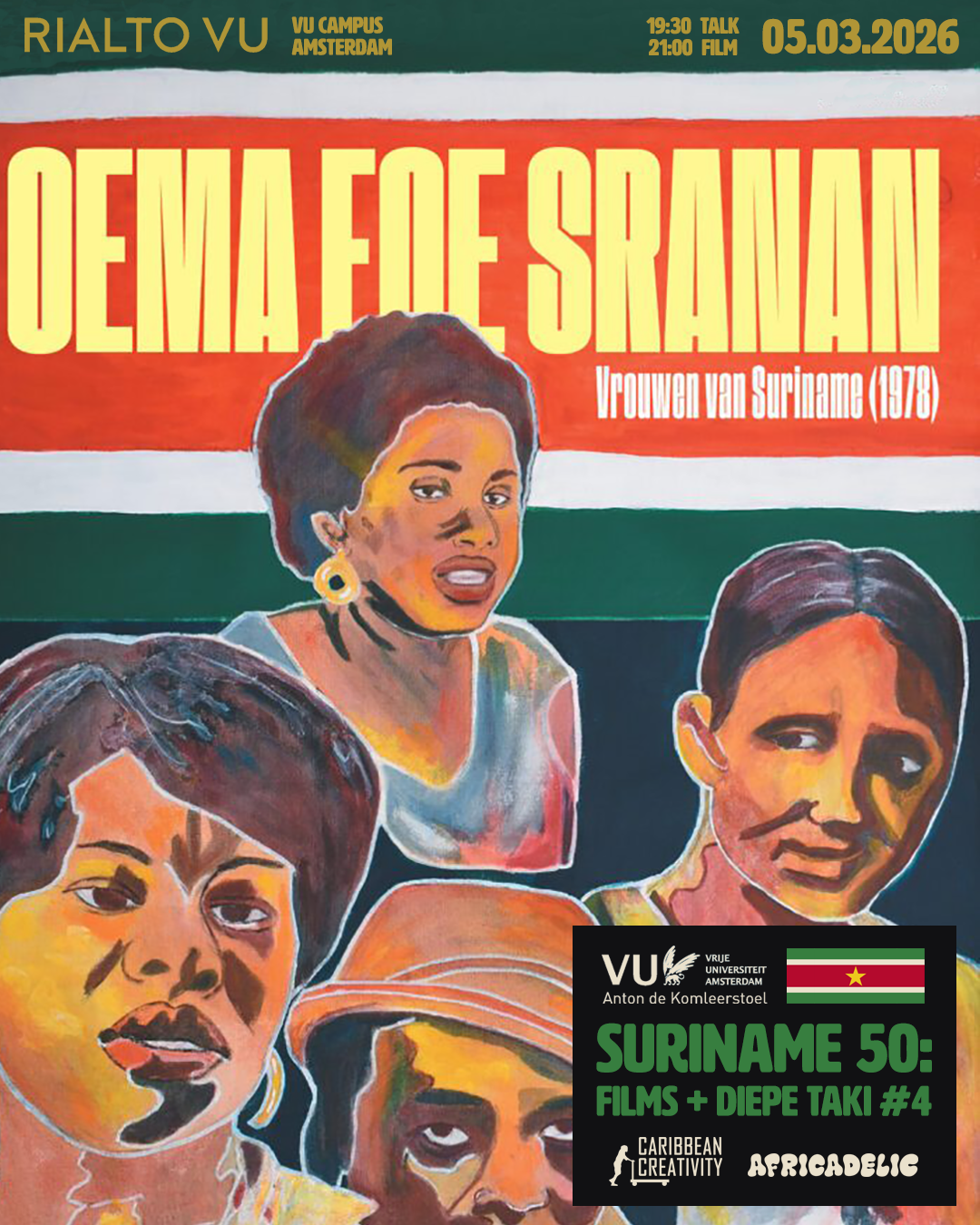
In the 𝗳𝗼𝘂𝗿𝘁𝗵 𝗲𝗱𝗶𝘁𝗶𝗼𝗻 of 𝗦𝘂𝗿𝗶𝗻𝗮𝗺𝗲 𝟱𝟬: 𝗙𝗶𝗹𝗺𝘀 + 𝗱𝗶𝗲𝗽𝗲 𝘁𝗮𝗸𝗶, we will screen 𝗢𝗲𝗺𝗮 𝗳𝗼𝗲 𝗦𝗿𝗮𝗻𝗮𝗻 (Vrouwen van Suriname, 1978)! The screening, which will start at 21:00 hrs, will be preceded by the short film 𝗦𝘁𝗿𝗶𝗷𝗱 𝗼𝗽 𝟭𝟲𝗺𝗺, which documents the stories surrounding the original production and screening of this underexposed activist film. And the film will be introduced by activist, journalist, and social pedagogue 𝗡𝗮𝗱𝗶𝗮 𝗧𝗶𝗹𝗼𝗻, who was involved in both the creation and the restoration of 𝗢𝗲𝗺𝗮 𝗳𝗼𝗲 𝗦𝗿𝗮𝗻𝗮𝗻. 


Before the screening, at 19:30 hrs, there will be a panel discussion, a deep taki, addressing the current position of Surinamese women in Dutch society. Former editor of Ashanti and columnist for Sarnámihuis, 𝗦𝗶𝘁𝗹𝗮 𝗕𝗼𝗻𝗼𝗼, will first speak about the history of the women’s newspaper Ashanti (“Discontent”) and its role within the Surinamese women’s movement of the 1980s. Writer and journalist 𝗨𝘀𝗵𝗮 𝗠𝗮𝗿𝗵𝗲 will then engage in conversation with a panel about the struggle for equal rights for women. The panelists are 𝗘𝘂𝗴𝗲𝗻𝗶𝗲 𝗪𝗮𝘁𝗲𝗿𝗯𝗲𝗿 (researcher, women’s advocate, and lecturer in the Department of Social and Cultural Anthropology at VU University) and 𝗗𝗲𝘄𝗶 𝗞𝗮𝘀𝗺𝗼 (theatre maker and actress). What can the current generation of women learn from the struggles of the 1980s? How relevant are the analyses of the social debates of that time today? What layers of oppression did Surinamese women face? How does the present generation view this history? In what ways are women today shaping their activism for a just and better world? What lessons can be drawn from past experiences, and how can these ‘lessons learned’ inform the future?
𝗦𝘂𝗿𝗶𝗻𝗮𝗺𝗲 𝟱𝟬: 𝗙𝗶𝗹𝗺 + 𝗱𝗶𝗲𝗽𝗲 𝘁𝗮𝗸𝗶 𝟰
Date: Thursday March 5, 2026
Time: 19:30 (introductions and panel discussion) and 21:00 (film screening)
Location: Aurorazaal (conversation) and Rialto VU (film screening
Address: Nieuwe Universiteitsgebouw, De Boelelaan 1111, Amsterdam
Film: 𝗢𝗲𝗺𝗮 𝗳𝗼𝗲 𝗦𝗿𝗮𝗻𝗮𝗻
Director: Cineclub Vrijheidsfilms and LOSON
Year: 1978
Country: Suriname and the Netherlands 
Duration: 75′
Language: Sranan Tongo
Subtitles: Dutch
Extra: 𝗜𝗻𝘁𝗿𝗼𝗱𝘂𝗰𝘁𝗶𝗼𝗻 to the film (21:00) by pedagogue, journalist and creative 𝗡𝗮𝗱𝗶𝗮 𝗧𝗶𝗹𝗼𝗻 (about the making of the film) and co-founder of the Ashanti magazine, introduction to the panel discussion (19:30) by 𝗦𝗶𝘁𝗹𝗮 𝗕𝗼𝗻𝗼𝗼 (about the Surinamese women’s movement in the Netherlands during the 1980s), and a 𝗽𝗮𝗻𝗲𝗹 𝗱𝗶𝘀𝗰𝘂𝘀𝘀𝗶𝗼𝗻 featuring cultural anthropologist 𝗘𝘂𝗴𝗲𝗻𝗶𝗲 𝗪𝗮𝘁𝗲𝗿𝗯𝗲𝗿𝗴 (VU) and 𝗗𝗲𝘄𝗶 𝗞𝗮𝘀𝗺𝗼, actress and artistic director of theatre company Lusu, moderated by author and journalist 𝗨𝘀𝗵𝗮 𝗠𝗮𝗿𝗵𝗲
Extra: Presented by 𝗩𝗨 𝗔𝗻𝘁𝗼𝗻 𝗱𝗲 𝗞𝗼𝗺𝗹𝗲𝗲𝗿𝘀𝘁𝗼𝗲𝗹, 𝗖𝗮𝗿𝗶𝗯𝗯𝗲𝗮𝗻 𝗖𝗿𝗲𝗮𝘁𝗶𝘃𝗶𝘁𝘆, 𝗔𝗳𝗿𝗶𝗰𝗮𝗱𝗲𝗹𝗶𝗰 and, this edition, the 𝗗𝗲𝗽𝗮𝗿𝘁𝗺𝗲𝗻𝘁 𝗼𝗳 𝗠𝗲𝗱𝗶𝗮 𝗦𝘁𝘂𝗱𝗶𝗲𝘀 (𝗨𝘃𝗔)
More info and tickets: https://rialtofilm.nl/en/films/2621
𝗔𝗯𝗼𝘂𝘁 𝗢𝗲𝗺𝗮 𝗳𝗼𝗲 𝗦𝗿𝗮𝗻𝗮𝗻
𝗢𝗲𝗺𝗮 𝗳𝗼𝗲 𝗦𝗿𝗮𝗻𝗮𝗻 (Women of Suriname) is the first documentary about Suriname spoken in Sranantongo, made in the years around independence. The film follows four women, Jetty, Sonja, Somai, and Sylvie, who resist marginalization and exploitation, as well as the poverty they experience on a daily basis. Through their personal stories, they offer insight into the history of colonialism, neocolonialism, and discrimination in Suriname and the Netherlands.
The causes of poverty are portrayed through quotations from Wij slaven van Suriname (We Slaves of Suriname) by Anton de Kom, a book included in the Dutch Canon. The film is an indictment of the role of the Netherlands as a colonizer and of the foreign companies that enrich themselves while leaving the country impoverished. Rather than depicting a suffering people, the film shows a people in struggle. Oema foe Sranan is a political film: the result of solidarity between Surinamese people and Dutch people.
𝗢𝗲𝗺𝗮 𝗳𝗼𝗲 𝗦𝗿𝗮𝗻𝗮𝗻 was produced by Cineclub Vrijheidsfilms in collaboration with LOSON (National Organization of Surinamese People in the Netherlands). In 2021, Eye, together with the IISG, decided to undertake its restoration.