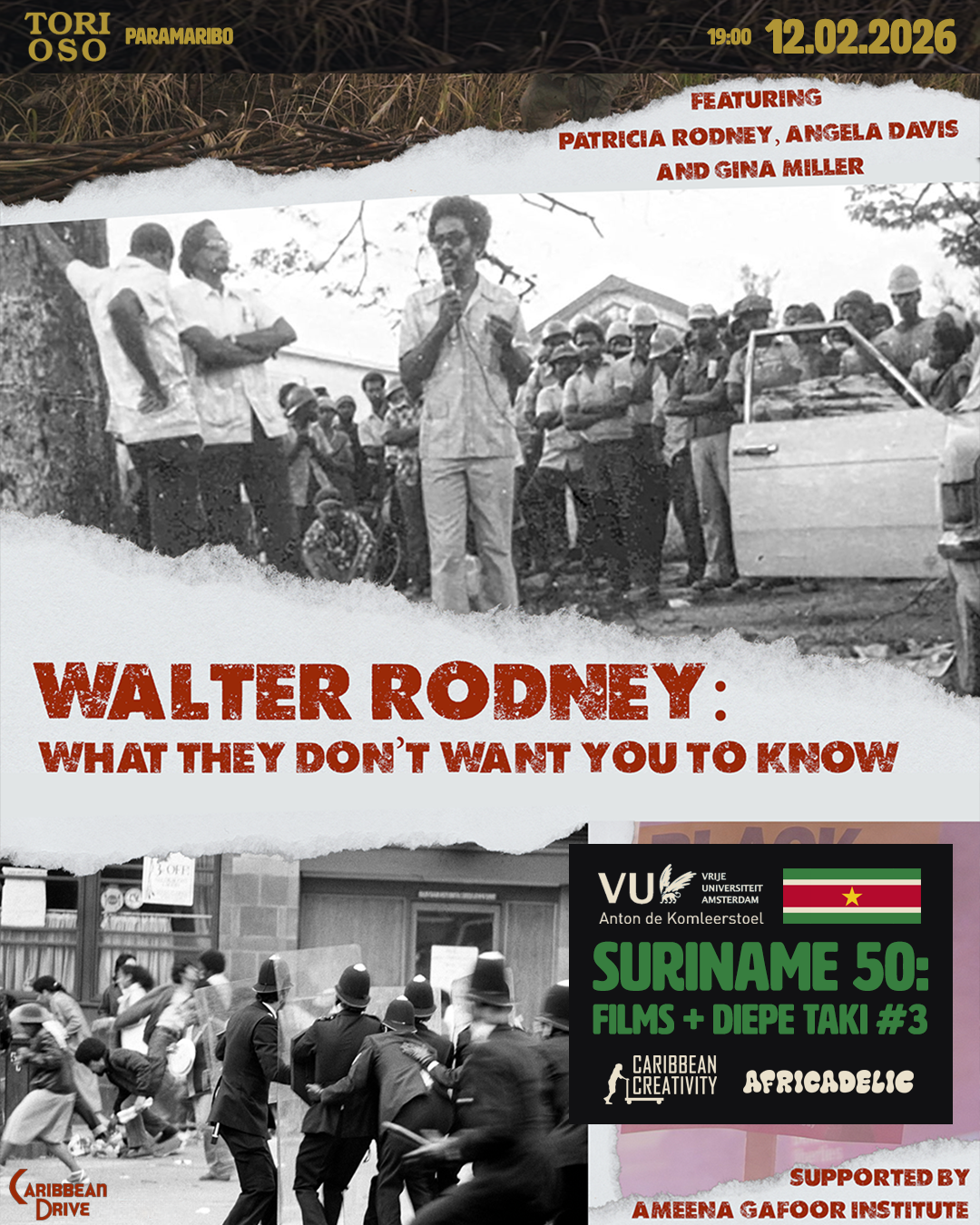

 𝗦𝘂𝗿𝗶𝗻𝗮𝗺𝗲 𝟱𝟬: 𝗙𝗶𝗹𝗺𝘀 + 𝗱𝗶𝗲𝗽𝗲 𝘁𝗮𝗸𝗶 #𝟯
In the 𝘁𝗵𝗶𝗿𝗱 𝗲𝗱𝗶𝘁𝗶𝗼𝗻 of 𝗦𝘂𝗿𝗶𝗻𝗮𝗺𝗲 𝟱𝟬: 𝗙𝗶𝗹𝗺𝘀 + 𝗱𝗶𝗲𝗽𝗲 𝘁𝗮𝗸𝗶, we will screen 𝗪𝗮𝗹𝘁𝗲𝗿 𝗥𝗼𝗱𝗻𝗲𝘆: 𝗪𝗵𝗮𝘁 𝗧𝗵𝗲𝘆 𝗗𝗼𝗻’𝘁 𝗪𝗮𝗻𝘁 𝗬𝗼𝘂 𝗧𝗼 𝗞𝗻𝗼𝘄 (2024) at 𝗧𝗼𝗿𝗶 𝗢𝘀𝗼 in 𝗣𝗮𝗿𝗮𝗺𝗮𝗿𝗶𝗯𝗼! 🙏🏿🖤✊🏿
Before the documentary is screened, there will be a panel discussion, a 𝗱𝗶𝗲𝗽𝗲 𝘁𝗮𝗸𝗶, addressing the question: How can we relate Rodney’s work to our (post)colonial relationship between Suriname and the Netherlands, and between Surinamese people here and in the diaspora? The evening will be opened by 𝗚𝘂𝗻𝗼 𝗝𝗼𝗻𝗲𝘀 (holder of the Anton de Kom Chair at Vrije Universiteit Amsterdam), and there will be a panel discussion with 𝗞𝗶𝗿𝘁𝗶𝗲 𝗔𝗹𝗴𝗼𝗲 (lecturer at Anton de Kom University of Suriname), 𝗠𝗮𝗿𝗰𝗲𝗹𝗶𝗻𝗼 𝗡𝗲𝗿𝗸𝘂𝘀𝘁 (president of the Federation of Organizations of Teachers in Suriname, FOLS), 𝗞𝗮𝗿𝗲𝗹 𝗘𝗰𝗸𝗵𝗼𝗿𝘀𝘁 (until recently Suriname’s negotiator with the IMF), and 𝗙𝗶𝗹𝗶𝗮 𝗞𝗿𝗮𝗺𝗽 (author of Schaduwnatie and Kringloop van moed). The discussion will be moderated by 𝗘𝘂𝗿𝗶𝘁𝗵𝗮 𝗧𝗷𝗮𝗻 𝗔 𝗪𝗮𝘆, journalist at De Ware Tijd.
𝗦𝘂𝗿𝗶𝗻𝗮𝗺𝗲 𝟱𝟬: 𝗙𝗶𝗹𝗺 + 𝗱𝗶𝗲𝗽𝗲 𝘁𝗮𝗸𝗶 #𝟯
Date: Thursday February 12, 2026
Time: 19:00 (conversation) and 20:30 (film screening)
Location: Tori Oso Suriname
Address: Fred DerbyStraat 76, Paramaribo, Suriname
Film: 𝗪𝗮𝗹𝘁𝗲𝗿 𝗥𝗼𝗱𝗻𝗲𝘆: 𝗪𝗵𝗮𝘁 𝗧𝗵𝗲𝘆 𝗗𝗼𝗻’𝘁 𝗪𝗮𝗻𝘁 𝗬𝗼𝘂 𝗧𝗼 𝗞𝗻𝗼𝘄
Director: Daniyal Harris-Vajda and Arlen Harris
Country: Guyana 🇬🇾 and United Kingdom 🇬🇧
Year: 2024
Length: 72′
Language: English
Subtitles: English
Extra: With an opening by 𝗚𝘂𝗻𝗼 𝗝𝗼𝗻𝗲𝘀 amd a panel discussion ft. 𝗞𝗶𝗿𝘁𝗶𝗲 𝗔𝗹𝗴𝗼𝗲, 𝗠𝗮𝗿𝗰𝗲𝗹𝗶𝗻𝗼 𝗡𝗲𝗿𝗸𝘂𝘀𝘁, 𝗞𝗮𝗿𝗲𝗹 𝗘𝗰𝗸𝗵𝗼𝗿𝘀𝘁 and 𝗙𝗶𝗹𝗶𝗮 𝗞𝗿𝗮𝗺𝗽, moderated by 𝗘𝘂𝗿𝗶𝘁𝗵𝗮 𝗧𝗷𝗮𝗻 𝗔 𝗪𝗮𝘆
Extra: Presented by 𝗩𝗨 𝗔𝗻𝘁𝗼𝗻 𝗱𝗲 𝗞𝗼𝗺𝗹𝗲𝗲𝗿𝘀𝘁𝗼𝗲𝗹, 𝗖𝗮𝗿𝗶𝗯𝗯𝗲𝗮𝗻 𝗖𝗿𝗲𝗮𝘁𝗶𝘃𝗶𝘁𝘆 and 𝗔𝗳𝗿𝗶𝗰𝗮𝗱𝗲𝗹𝗶𝗰
More info and tickets: Soon available
𝗔𝗯𝗼𝘂𝘁 𝗪𝗮𝗹𝘁𝗲𝗿 𝗥𝗼𝗱𝗻𝗲𝘆: 𝗪𝗵𝗮𝘁 𝗧𝗵𝗲𝘆 𝗗𝗼𝗻’𝘁 𝗪𝗮𝗻𝘁 𝗬𝗼𝘂 𝗧𝗼 𝗞𝗻𝗼𝘄
𝗪𝗮𝗹𝘁𝗲𝗿 𝗥𝗼𝗱𝗻𝗲𝘆: 𝗪𝗵𝗮𝘁 𝗧𝗵𝗲𝘆 𝗗𝗼𝗻’𝘁 𝗪𝗮𝗻𝘁 𝗬𝗼𝘂 𝘁𝗼 𝗞𝗻𝗼𝘄 is a feature-length documentary that explores the assassination of Dr. Walter Rodney and the Cold War conspiracies, Black Power movements, and colonial legacies connected to it — all linking to today’s surveillance, policing, and activism. For the first time, Rodney’s widow Patricia Rodney shares the personal toll of his murder on their family. Highlighting the demand for alternative historical perspectives, the film includes insights from Angela Davis, Gina Miller, and former Guyanese President Donald Ramotar. Premiering at the British Film Institute’s largest screen to a sold-out audience, the film uncovers Rodney’s surveillance from age 19 after his visits to Russia and Cuba, as his academic and activist work was deemed threatening by British intelligence. A secret propaganda unit even financed negative reviews of his landmark book, How Europe Underdeveloped Africa, which remains influential in modern movements like BLM and Pan-Africanism. Through declassified documents, intimate interviews, and reenactments, the documentary captures Rodney’s enduring global legacy, filmed with local crews in the Caribbean, U.S., Africa, and the U.K. Supported by The Walter Rodney Foundation & The Ameena Gafoor Institute.
‘𝘛𝘩𝘪𝘴 𝘤𝘰𝘮𝘱𝘦𝘭𝘭𝘪𝘯𝘨 𝘥𝘰𝘤𝘶𝘮𝘦𝘯𝘵𝘢𝘳𝘺 𝘥𝘦𝘭𝘷𝘦𝘴 𝘪𝘯𝘵𝘰 𝘵𝘩𝘦 𝘭𝘪𝘧𝘦 𝘢𝘯𝘥 𝘭𝘦𝘨𝘢𝘤𝘺 𝘰𝘧 𝘋𝘳. 𝘞𝘢𝘭𝘵𝘦𝘳 𝘙𝘰𝘥𝘯𝘦𝘺, 𝘢 𝘱𝘳𝘰𝘮𝘪𝘯𝘦𝘯𝘵 𝘩𝘪𝘴𝘵𝘰𝘳𝘪𝘢𝘯, 𝘢𝘤𝘵𝘪𝘷𝘪𝘴𝘵, 𝘢𝘯𝘥 𝘢 𝘤𝘩𝘢𝘮𝘱𝘪𝘰𝘯 𝘧𝘰𝘳 𝘵𝘩𝘦 𝘧𝘪𝘨𝘩𝘵 𝘢𝘨𝘢𝘪𝘯𝘴𝘵 𝘤𝘰𝘭𝘰𝘯𝘪𝘢𝘭𝘪𝘴𝘮’ (𝘍𝘢𝘤𝘦𝘵𝘴.𝘰𝘳𝘨).
𝗔𝗯𝗼𝘂𝘁 𝗦𝘂𝗿𝗶𝗻𝗮𝗺𝗲 𝟱𝟬: 𝗙𝗶𝗹𝗺𝘀 + 𝗱𝗶𝗲𝗽𝗲 𝘁𝗮𝗸𝗶
On 25 November, 2025, Suriname marked 50 years of independence. The Anton de Kom Chair, in collaboration with Caribbean Creativity and Africadelic, is celebrating this with film evenings featuring classic films and documentaries, followed by discussions on representation. Stuart Hall analyzed films by examining the role cinema plays in shaping and representing cultural identity. He emphasized how films, as a form of ‘enunciative practice’ (a mode of expression or articulation), can challenge colonial stereotypes and shape diasporic identities. Crucially, Hall shows that meanings expressed through cultural representations such as films are dynamic (not fixed) and dependent on power and perspective. Which stories are told and by whom? Which stories or themes are silenced or underrepresented in films? And what role do gender, ethnicity, and class play in this?